NeuroNavigation Library
The NeuroNavigation Toolkit Collection
Created by NeuroNavigation
Every NeuroNavigation resource is designed to translate evidence-informed, neurodiversity-affirming practice into practical strategies that families, educators and support teams can use immediately. My goal is simple: to create tools that reduce overwhelm, build confidence and help neurodivergent people thrive.
Practical tools. Compassionate strategies. Real-life support.
Welcome to the NeuroNavigation Library—a growing collection of neurodiversity-affirming resources created to help autistic, ADHD and PDA-profile children, teenagers, adults, families and educators navigate everyday life with greater confidence.
Every resource has been thoughtfully designed from nearly two decades of experience working alongside neurodivergent people in homes, schools and community settings. Rather than overwhelming you with theory, these tools focus on practical, evidence-informed strategies that can be used immediately to reduce overwhelm, build understanding and support meaningful participation.
Whether you're looking for free educational guides, printable visual supports, executive functioning tools or comprehensive toolkits, our resources are here to help you feel supported, informed and empowered—one step at a time.
Because everyone deserves tools that work with their brain, not against it.
Rejection Sensitivity & Being Perceived
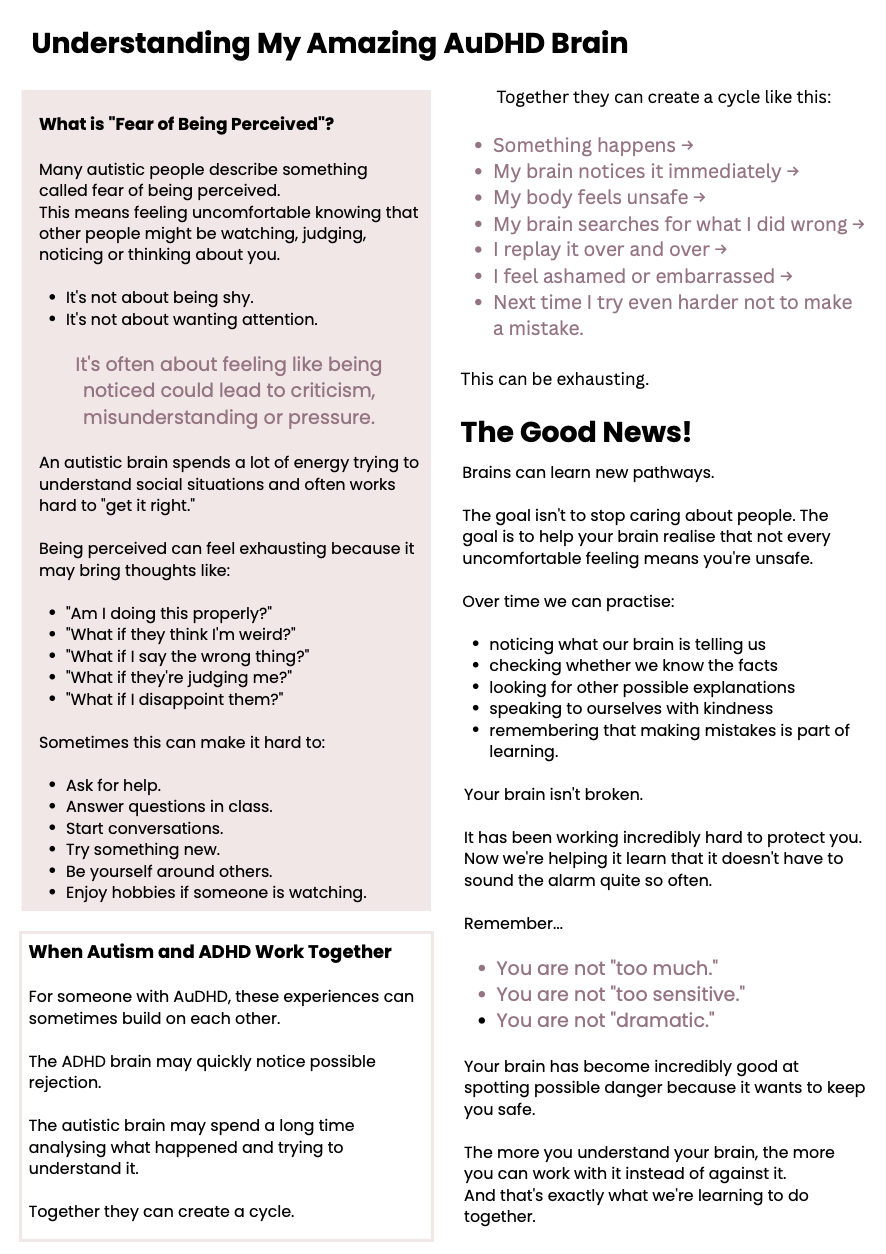
Understanding My Amazing AuDHD Brain
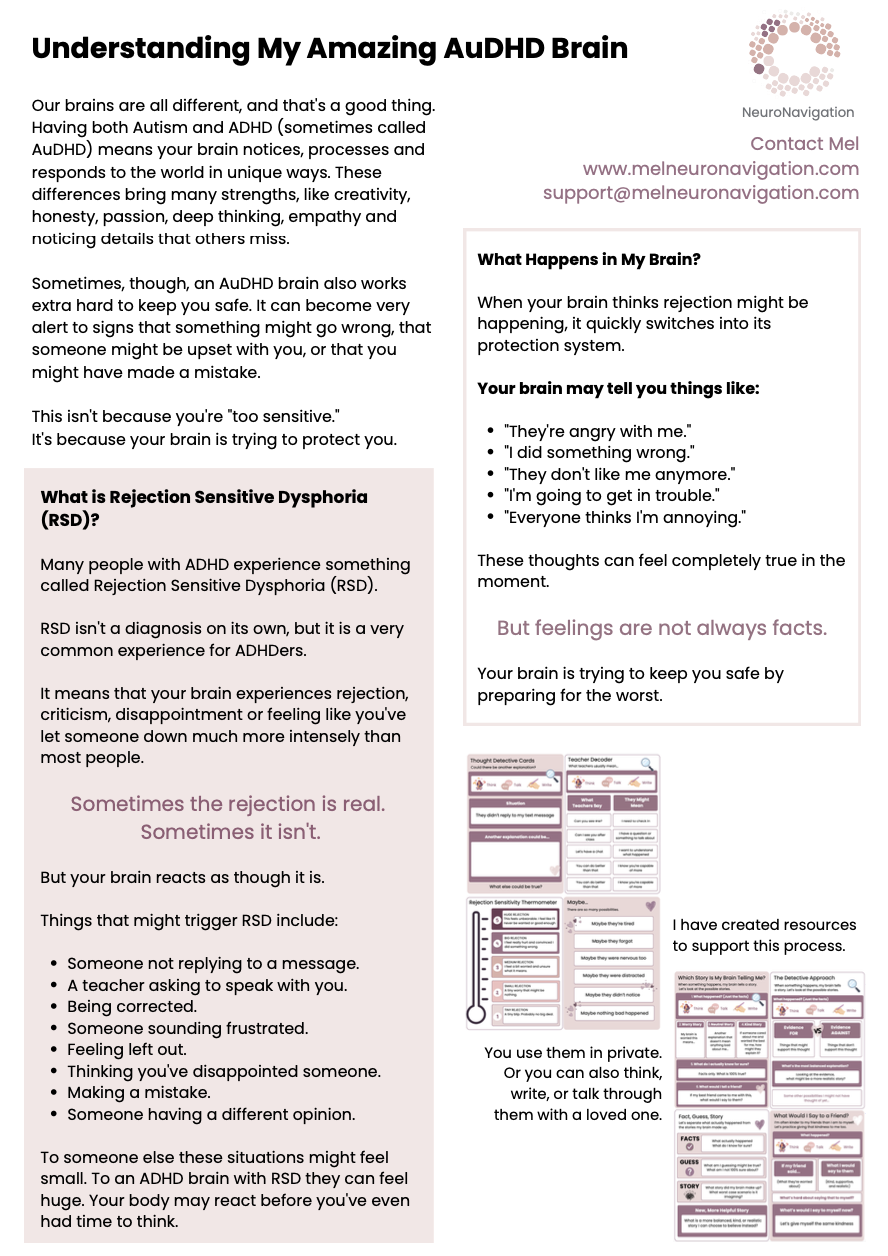
If you've ever wondered...
Why criticism hurts so much...
Why you replay conversations for hours...
Why being watched feels exhausting...
Why small mistakes feel enormous...
Why your brain assumes you've done something wrong...
...this guide is for you.
Learn about:
✔ Rejection Sensitive Dysphoria (RSD)
✔ Fear of Being Perceived
✔ The AuDHD Brain
✔ Why your brain is trying to protect you
✔ How understanding your brain is the first step towards self-compassion
I've created practical companion resources to help you work through these experiences step-by-step.
Explore the companion resources - The RSD Flexible Toolkit $29.95
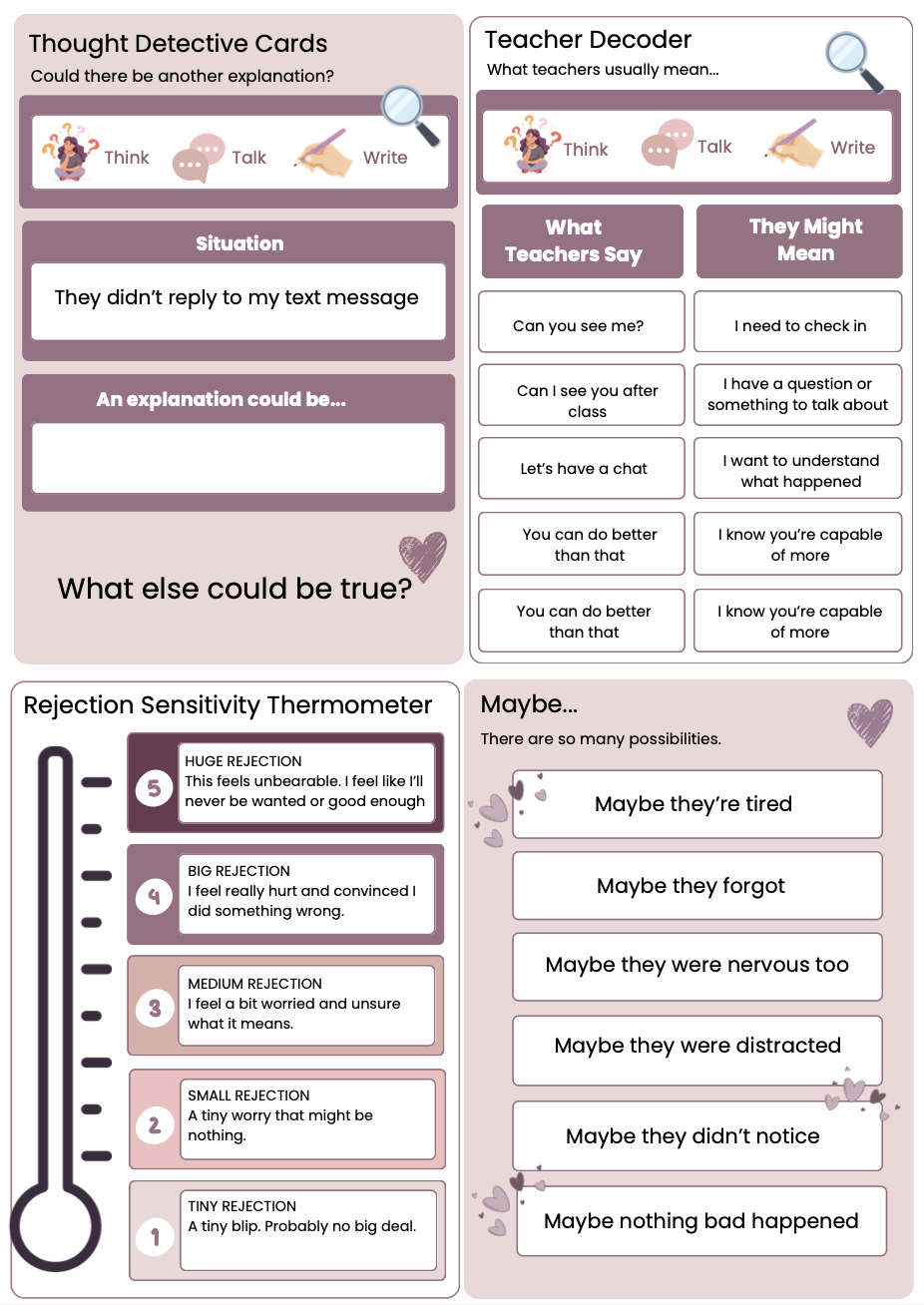
Thought Detective Cards
Rejection Sensitivity Thermometer
Teacher Decoder
Maybe They're Busy...
What Would I Say to a Friend?
Facts vs Story
Companion Resources-
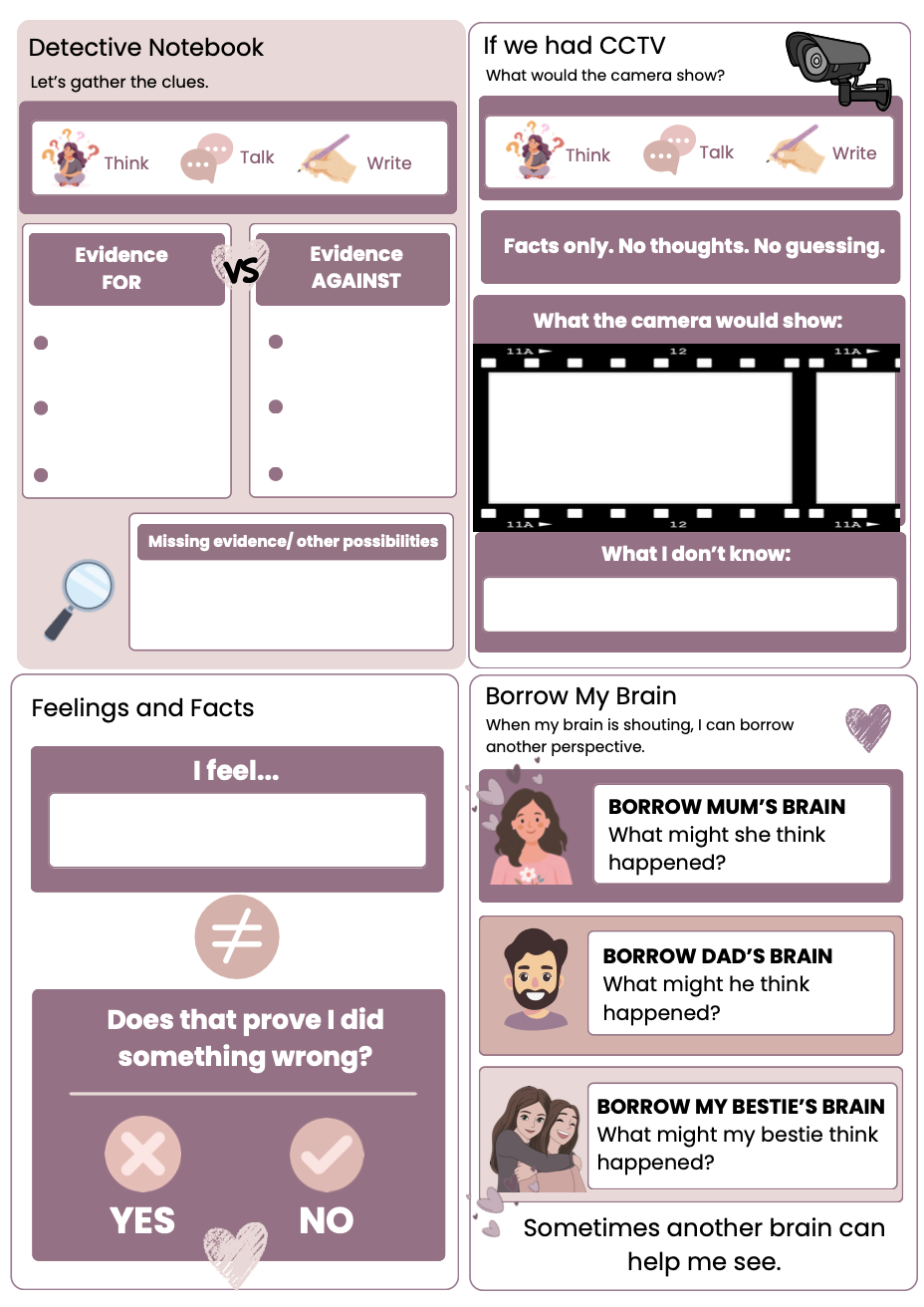
RSD & Flexible Thinking Toolkit
Includes 20+ printable coaching cards and worksheets to help children, teens and adults understand anxious thoughts, Rejection Sensitive Dysphoria (RSD), fear of being perceived and flexible thinking through gentle, neurodiversity-affirming activities.
Inside You'll Find
Thought Detective Cards
Learn to investigate anxious thoughts and consider alternative explanations.
Rejection Sensitivity Thermometer
Recognise the difference between small worries and overwhelming feelings.
Teacher Decoder
Understand what common teacher phrases usually mean to reduce anxiety.
Fact • Guess • Story
Separate what happened from the story your brain created.
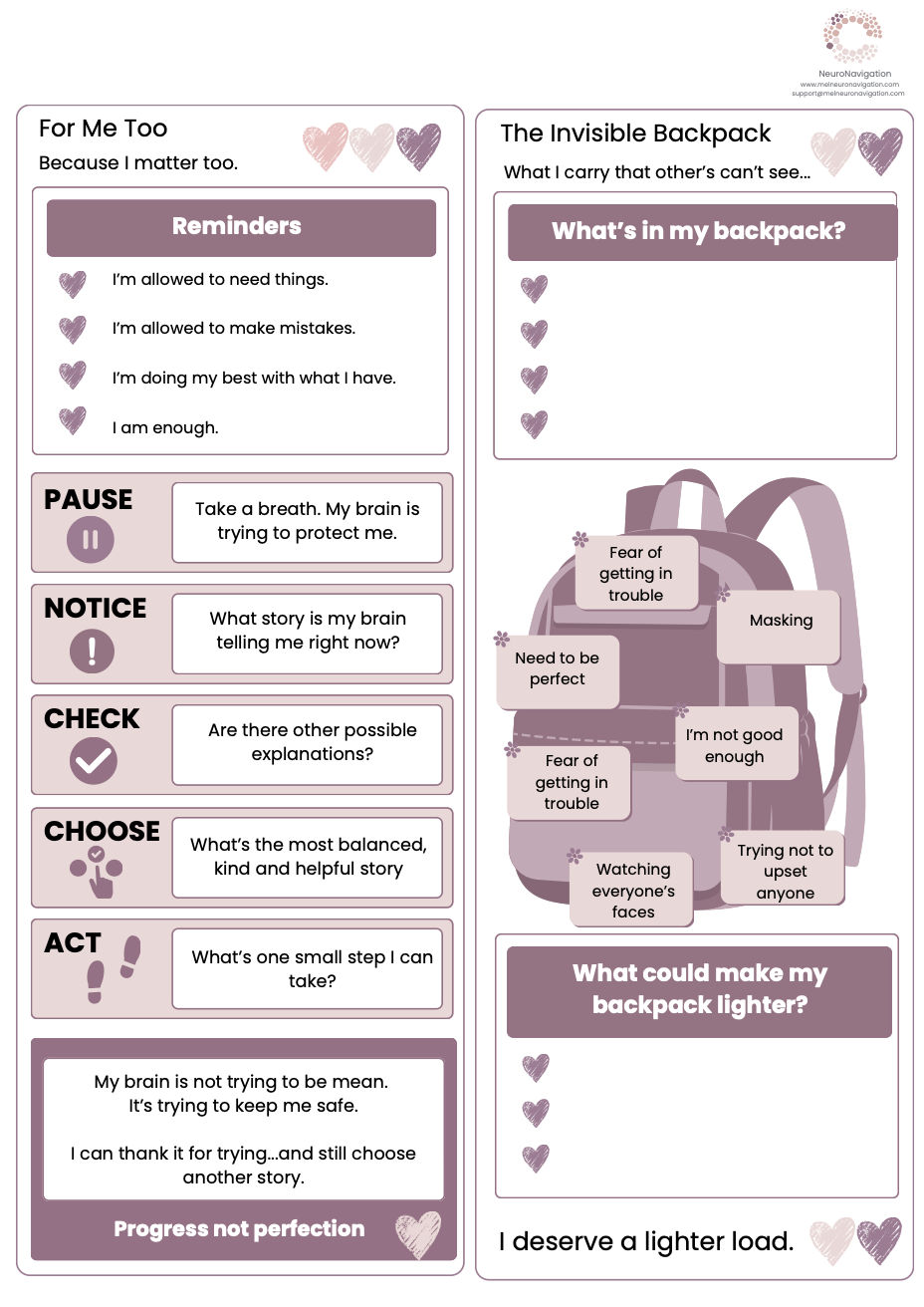
Invisible Backpack
Explore the invisible worries and pressures you carry each day.
Self-Compassion Tools
Practise responding to yourself with kindness instead of criticism.
Flexible Thinking Activities
Build more balanced and realistic ways of thinking.
And many more…
Perfect for
✔ Parents
✔ Teachers
✔ Psychologists
✔ OTs
✔ Speech Pathologists
✔ Support Workers
✔ School Counsellors
✔ Educational Consultants
✔ Home
✔ Classroom
✔ Therapy sessions
(Print. Laminate. Use again and again. These reusable visual supports can be: • printed as A4 worksheets • laminated as reusable prompt cards • displayed in classrooms • used during therapy sessions • kept in school diaries • used during emotional coaching • completed independently • completed together with a trusted adult).
Executive Functioning & Task Initiation Supports
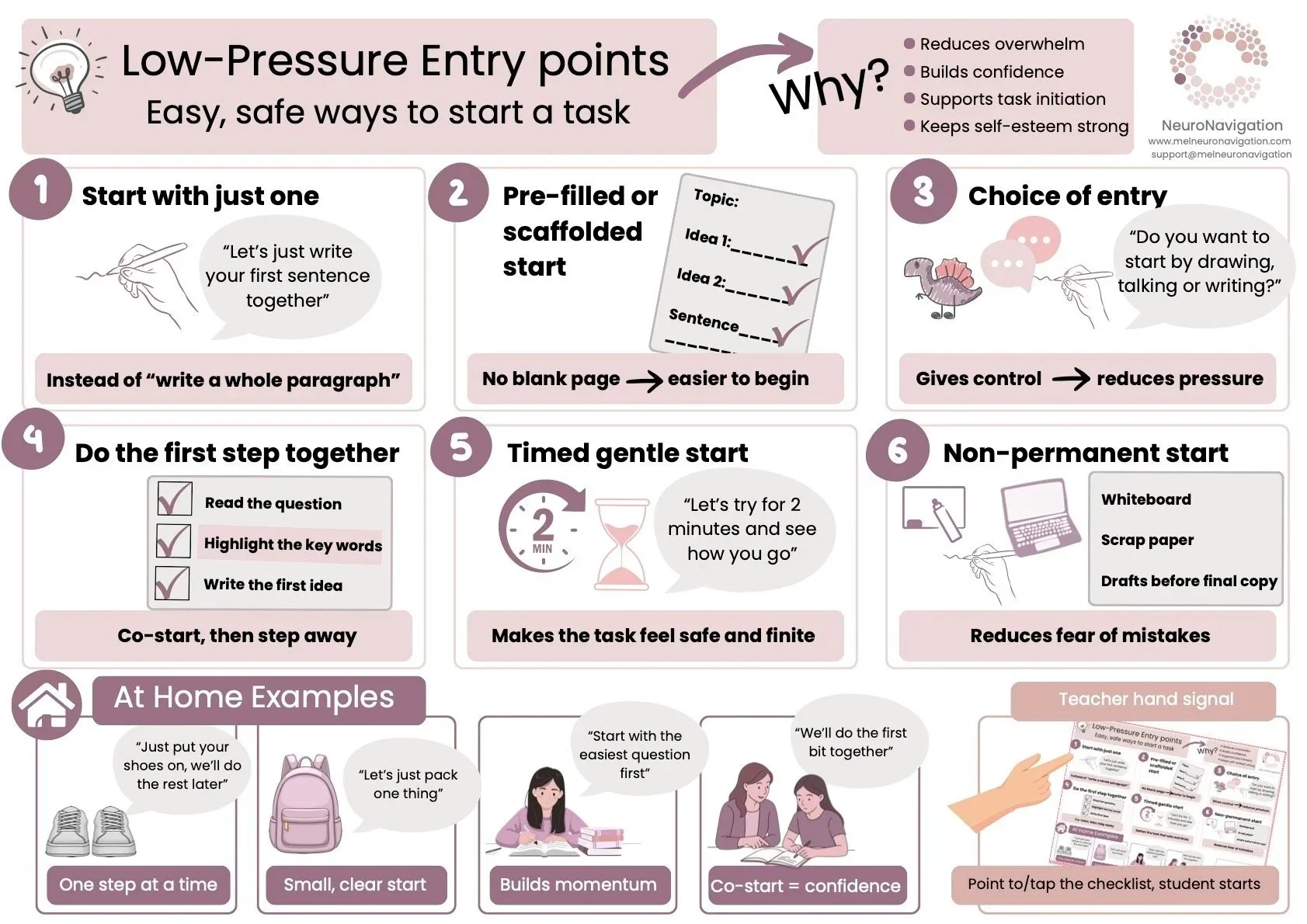
6 Practical Ways to Help Neurodivergent Learners Start Difficult Tasks.
Sometimes getting started is the hardest part.
For many neurodivergent children and adults, the challenge isn't motivation or willingness—it's task initiation. Executive functioning differences, anxiety, perfectionism and overwhelm can make even simple tasks feel impossible to begin.
This printable visual guide shares six neurodiversity-affirming strategies that reduce pressure, build confidence and make starting feel safe and achievable. It includes practical examples that can be used at home, in the classroom or during therapy sessions.
Perfect for:
✔ Parents
✔ Teachers
✔ Teacher Aides / SLSOs
✔ Support Workers
✔ Therapists
✔ Homeschooling Families
✔ Neurodivergent Adults
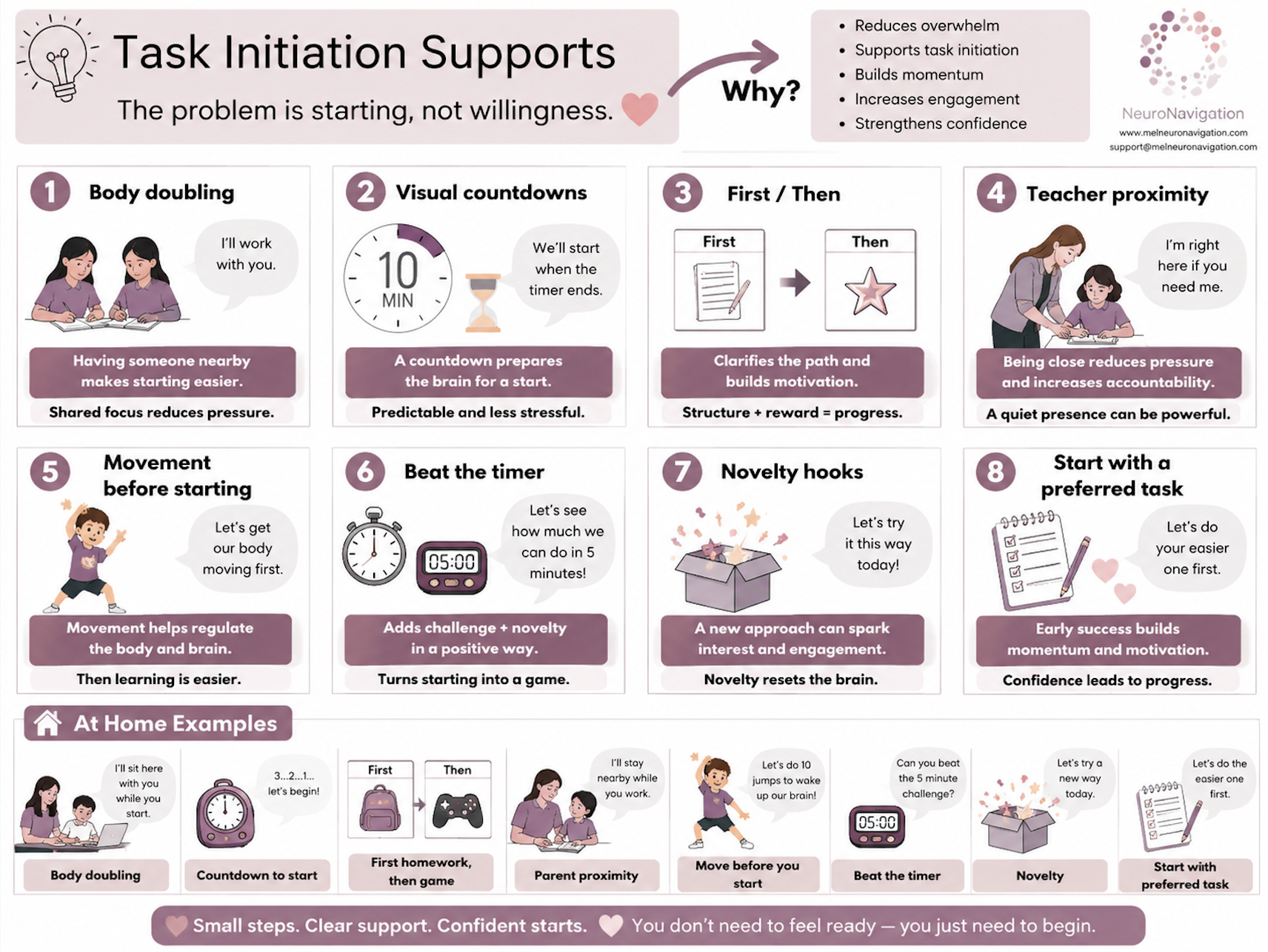
Practical Strategies to Build Momentum and Confidence.
Starting a task can feel overwhelming when executive functioning differences make it difficult to know where to begin.
This visual guide explains why task initiation is challenging and shares eight practical supports—including body doubling, visual countdowns, movement, novelty and "first/then" strategies—to help children, teenagers and adults move from feeling stuck to getting started. It also includes everyday examples that families can use immediately.
Perfect for:
✔ Parents
✔ Teachers
✔ Support Workers
✔ Occupational Therapists
✔ Educational Consultants
✔ ADHD & Autistic Learners
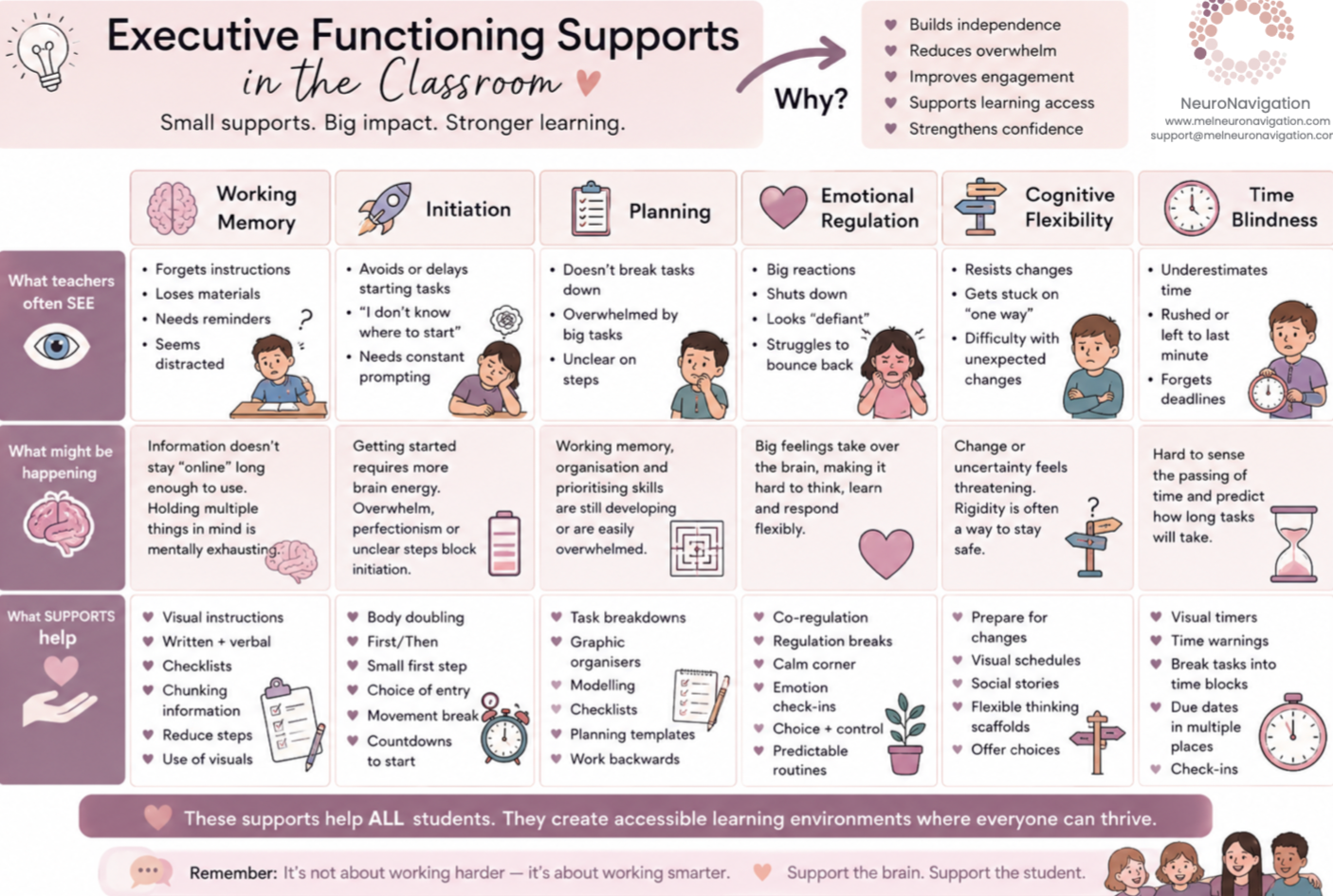
Practical Classroom Supports That Build Independence.
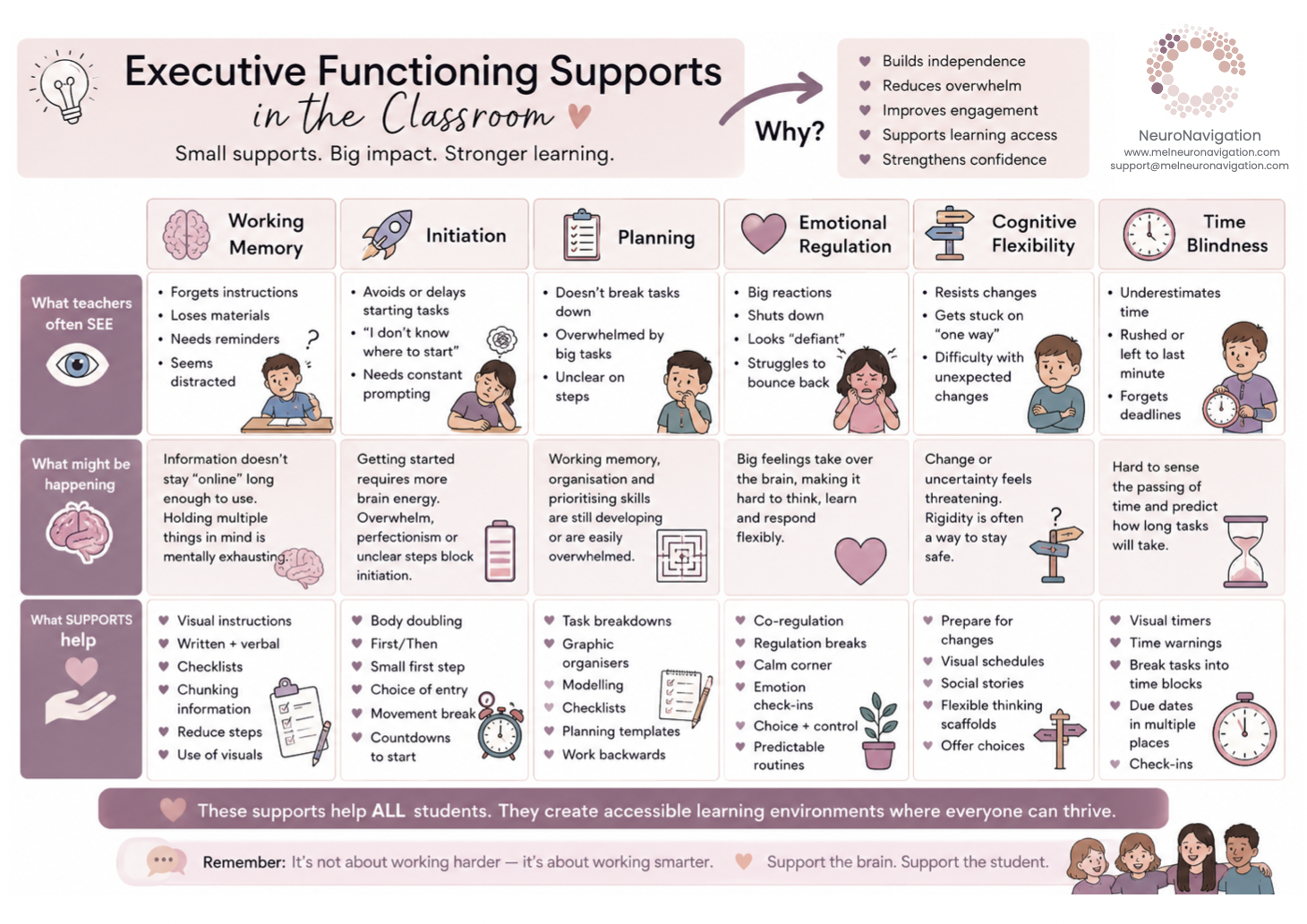
Executive functioning isn't about intelligence—it's about how the brain organises, plans, starts and completes tasks.
This printable guide explains common executive functioning differences, including working memory, planning, emotional regulation, cognitive flexibility and time blindness. It pairs each area with practical classroom strategies that reduce barriers and support learning for all students.
Ideal for:
✔ Classroom Teachers
✔ Learning Support Teams
✔ Education Support Staff
✔ School Leaders
✔ Homeschooling Families
Strategies that help everyone
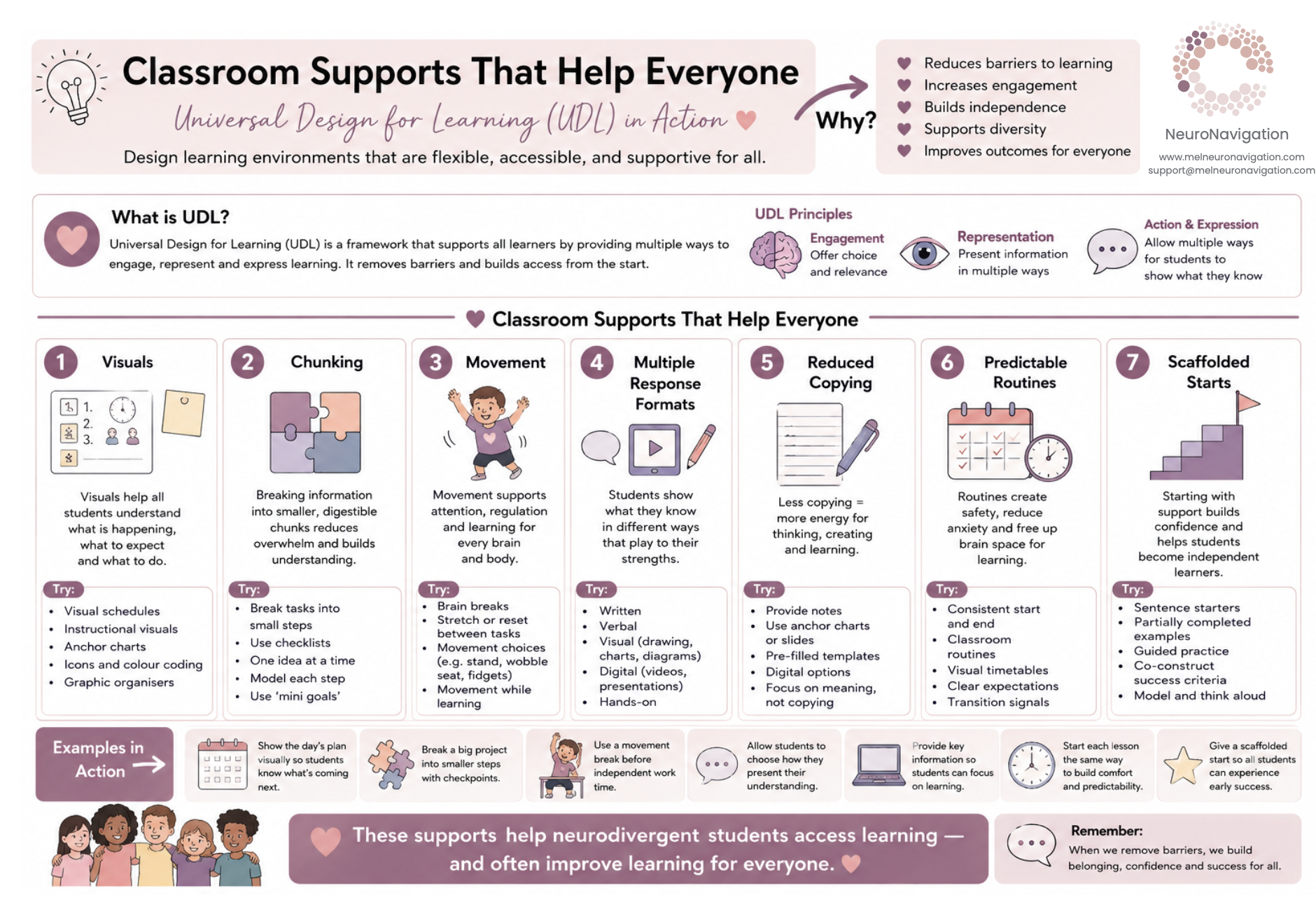
Universal Design for Learning (UDL) in Action.
Great classroom supports don't just help neurodivergent students—they make learning more accessible for everyone.
Based on Universal Design for Learning (UDL), this printable resource provides practical strategies such as visuals, chunking, movement, predictable routines and scaffolded starts to reduce barriers and improve engagement across the classroom.
Perfect for:
✔ Teachers
✔ Beginning Teachers
✔ School Leaders
✔ Learning Support Teams
✔ Education Support Staff
✔ Universities
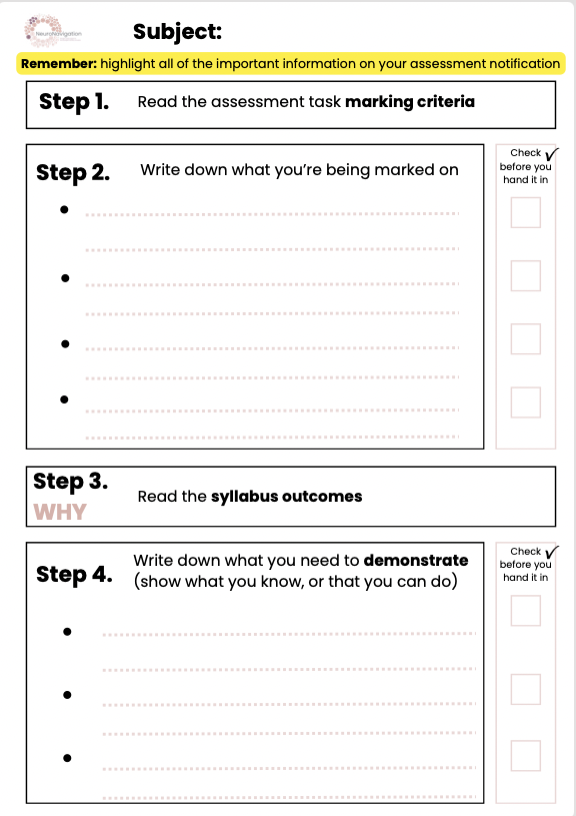
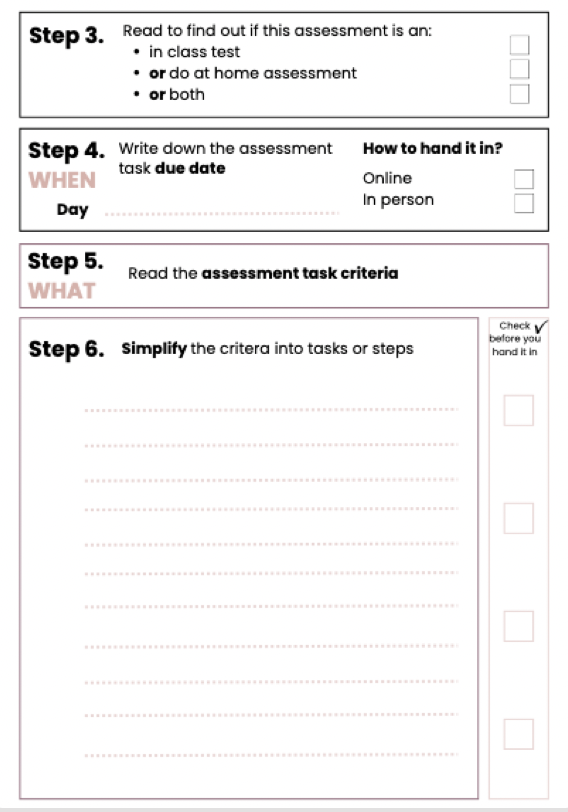
Helping Students Break Down Assessment Tasks with Confidence.
Assessment tasks can feel overwhelming before students even begin.
Many neurodivergent students don't struggle because they don't understand the content—they struggle because they don't know how to interpret the assessment notification, identify what they're being asked to do or plan where to start.
This practical workbook breaks the assessment process into clear, manageable steps, helping students organise information, understand marking criteria and plan their work with greater confidence.
Designed to reduce overwhelm and support executive functioning, this scaffold can be used independently or alongside parents, teachers and support staff.
Perfect For
✔ High school students
✔ Autistic students
✔ ADHD students
✔ Students with executive functioning differences
✔ Learning Support Teachers
✔ SLSOs / Teacher Aides
✔ Parents supporting homework
✔ Homeschooling families
✔ Educational Consultants
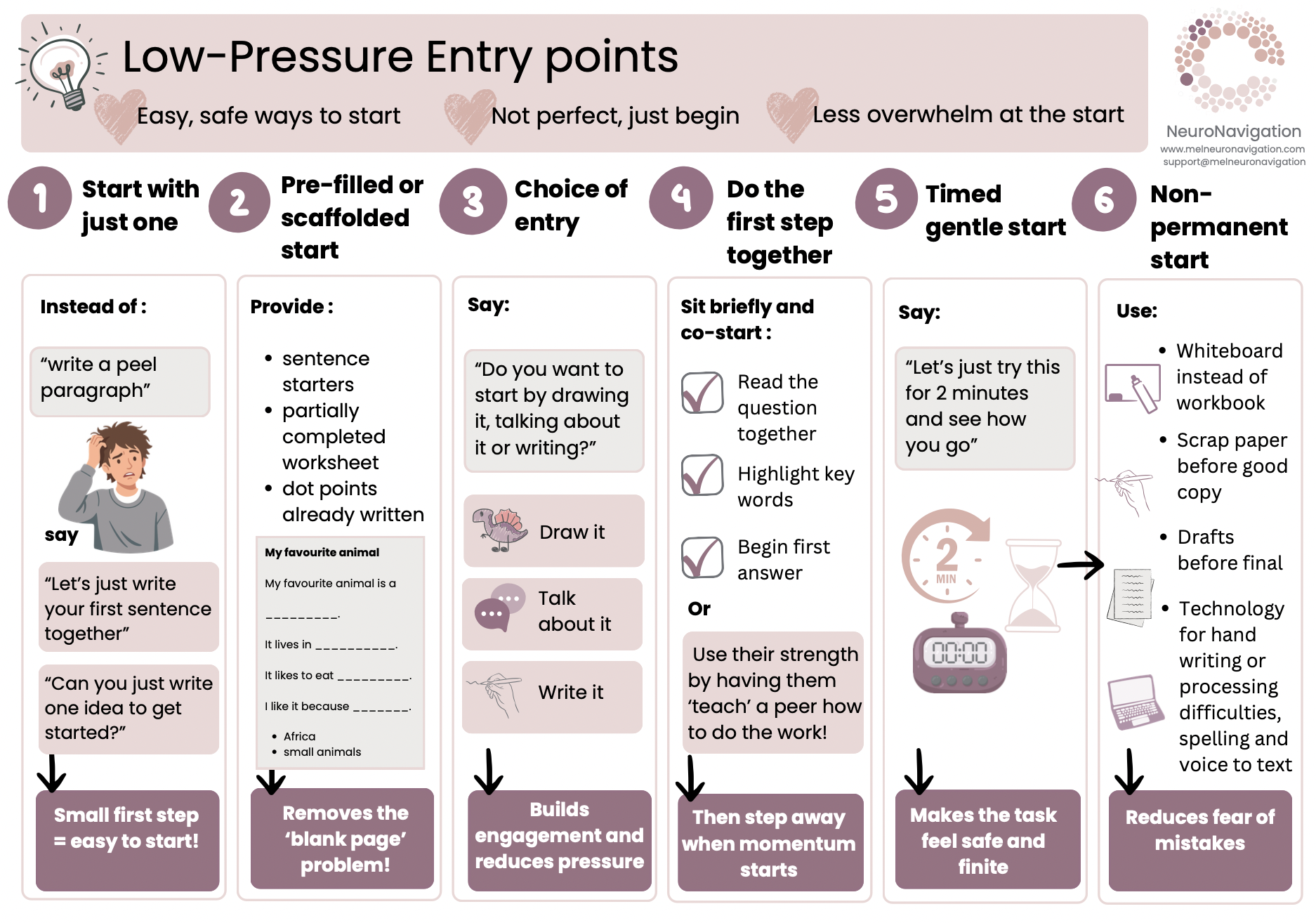
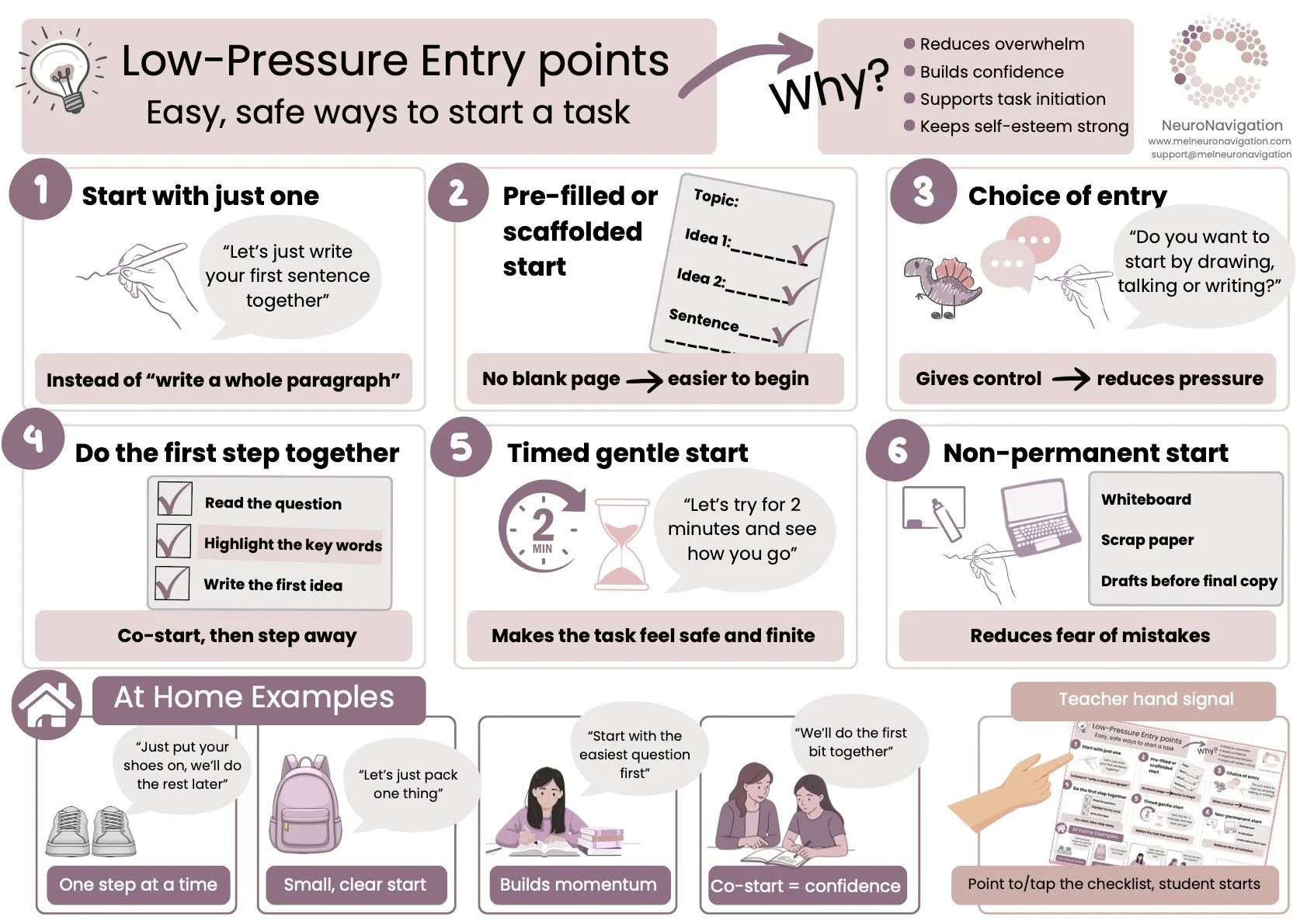
6 Practical Strategies to Help Neurodivergent Learners Start Tasks with Confidence.
Sometimes the hardest part isn't doing the work—it's getting started.
For many neurodivergent children, teenagers and adults, task initiation can feel overwhelming. Difficulties with executive functioning, anxiety, perfectionism or feeling unsure where to begin can cause even simple tasks to feel impossible.
This printable guide shares six practical, neurodiversity-affirming strategies that reduce pressure, lower overwhelm and make starting feel safer and more achievable. Designed for use at home, in classrooms or during therapy sessions, these strategies help build confidence without relying on pressure, rewards or repeated prompting.
Perfect For
Parents and caregivers
Teachers
Learning Support Teachers
SLSOs / Teacher Aides
Support Workers
Occupational Therapists
Speech Pathologists
Educational Consultants
Homeschooling families
Neurodivergent teens and adults
Transitions & Shutdowns
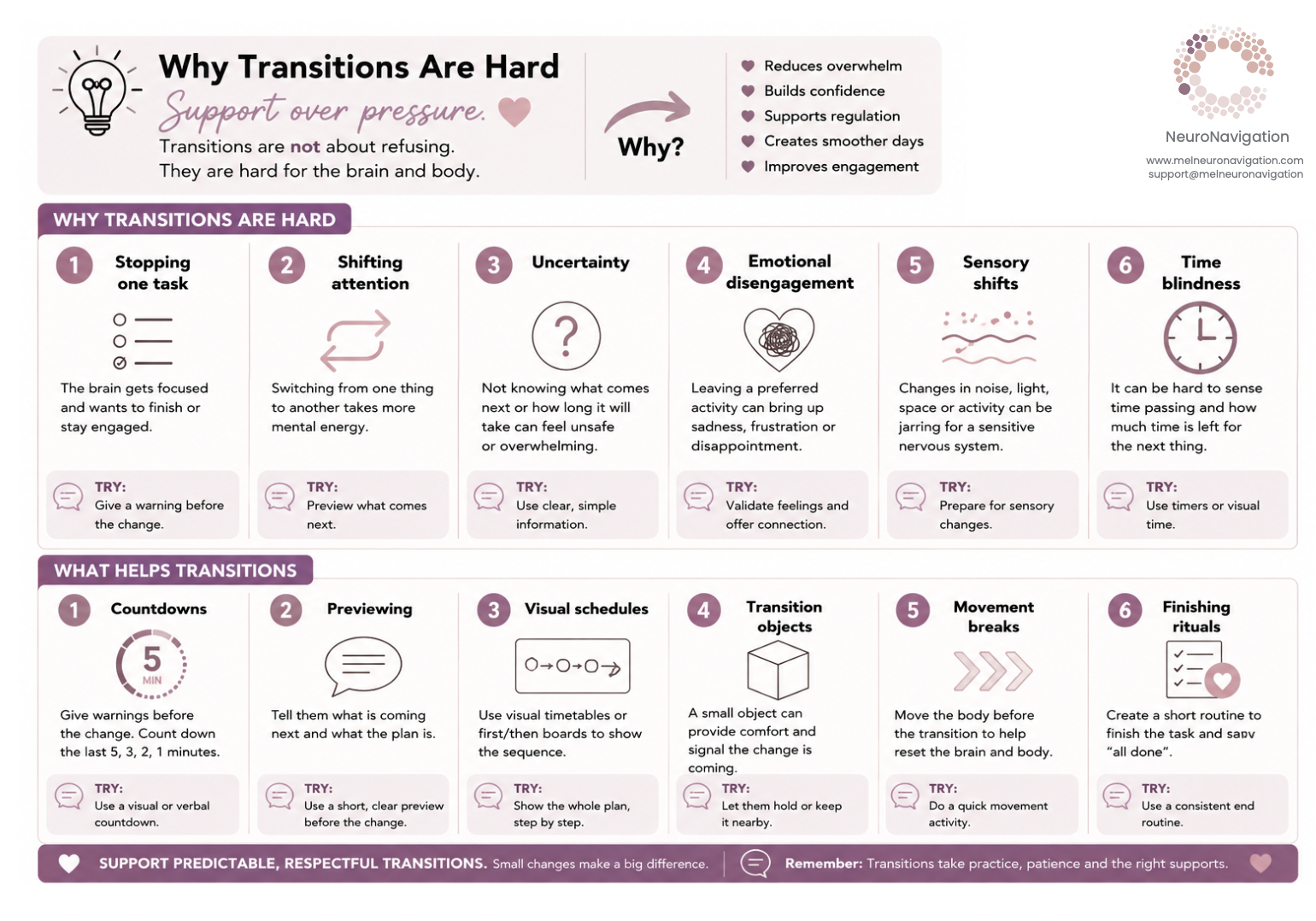
Helping Neurodivergent People Move Between Activities with Less Stress.
Transitions can be one of the most challenging parts of the day—not because a child is refusing, but because shifting attention, managing uncertainty and processing change takes significant mental energy.
This printable guide explains why transitions are difficult and provides practical strategies including countdowns, visual schedules, transition objects, movement breaks and predictable routines to make daily transitions calmer and more successful.
Perfect for:
✔ Parents
✔ Early Childhood Educators
✔ Teachers
✔ Support Workers
✔ Therapists
✔ Homeschooling Families
6 Practical Strategies to Help Neurodivergent Learners Start Tasks with Confidence.
Sometimes the hardest part isn't doing the work—it's getting started.
For many neurodivergent children, teenagers and adults, task initiation can feel overwhelming. Difficulties with executive functioning, anxiety, perfectionism or feeling unsure where to begin can cause even simple tasks to feel impossible.
This printable guide shares six practical, neurodiversity-affirming strategies that reduce pressure, lower overwhelm and make starting feel safer and more achievable. Designed for use at home, in classrooms or during therapy sessions, these strategies help build confidence without relying on pressure, rewards or repeated prompting.
Perfect For
Parents and caregivers
Teachers
Learning Support Teachers
SLSOs / Teacher Aides
Support Workers
Occupational Therapists
Speech Pathologists
Educational Consultants
Homeschooling families
Neurodivergent teens and adults
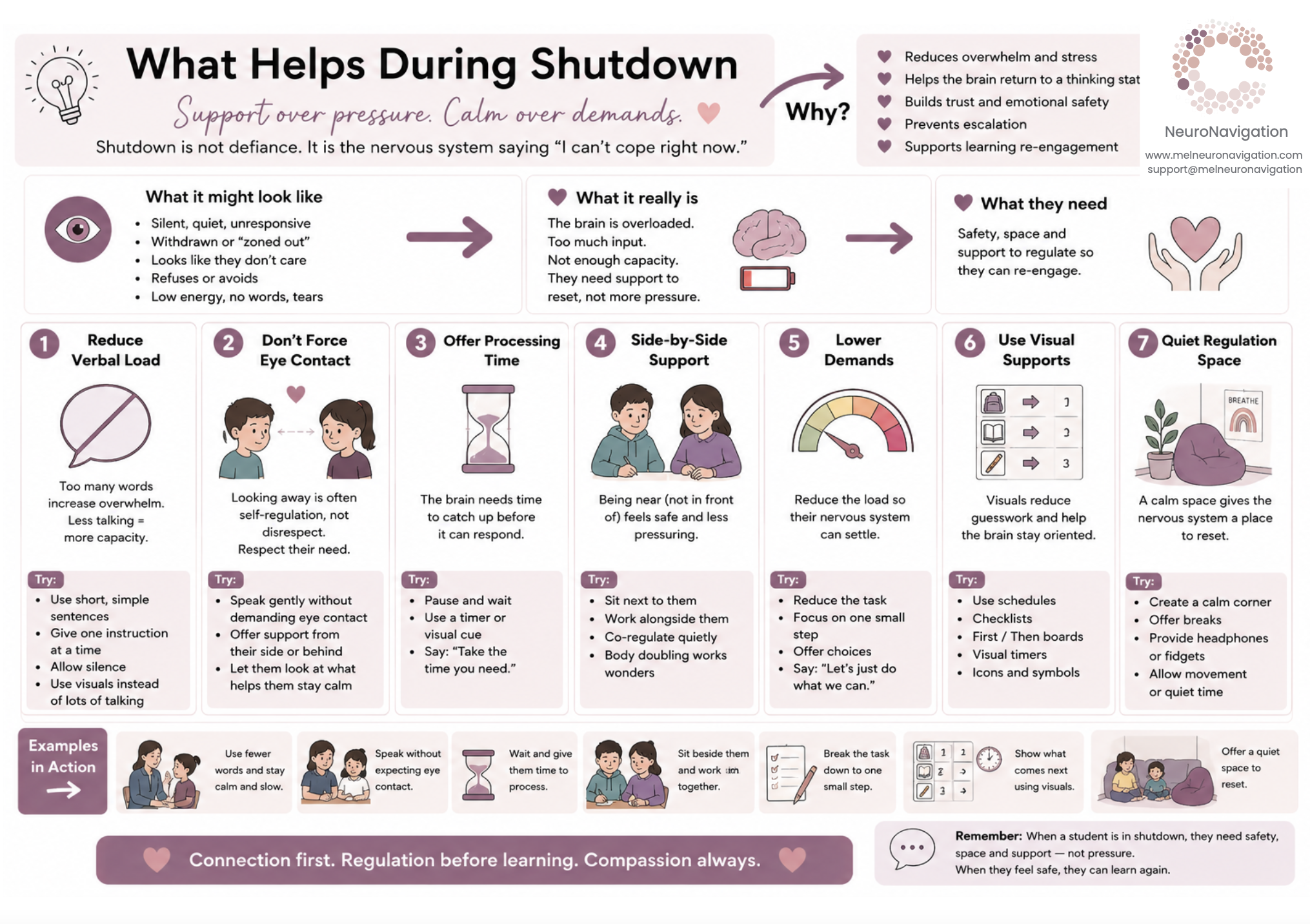
A Neurodiversity-Affirming Guide for Parents, Teachers & Support Workers.
Shutdown is often misunderstood as defiance, disengagement or refusing to participate. In reality, it is a protective nervous system response to overwhelming stress.
This practical guide explains what shutdown may look like, what's happening in the brain and how to respond with safety, compassion and co-regulation. It includes strategies such as reducing verbal demands, allowing processing time, using visual supports and creating calm regulation spaces.
Ideal for:
✔ Parents
✔ Teachers
✔ Support Workers
✔ Therapists
✔ Disability Support Teams
✔ Schools
Nervous System & Emotional Regulation
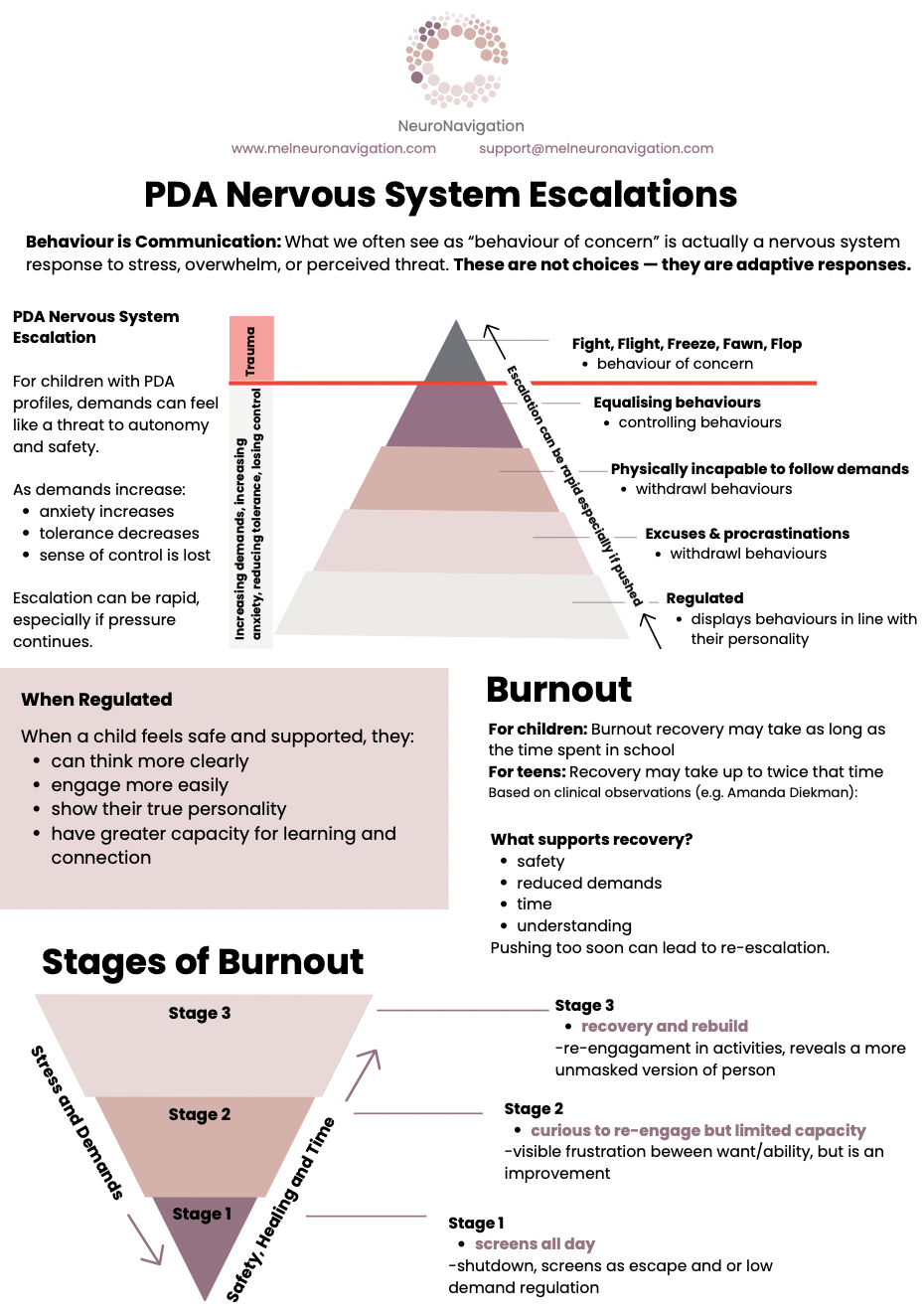
Understanding Behaviour Through a Nervous System Lens.
Behaviour is communication—not defiance.
For children and young people with a PDA profile, increasing demands can quickly trigger anxiety, overwhelm and nervous system escalation. This visual guide explains why escalation happens, how burnout develops and what truly supports recovery.
Rather than focusing on behaviour management, this resource encourages a compassionate understanding of nervous system responses, showing how safety, reduced demands and time help rebuild capacity. It also explores the stages of autistic burnout and why pushing too soon can lead to further dysregulation.
Perfect For
✔ Parents
✔ Teachers
✔ Support Workers
✔ School Teams
✔ Therapists
✔ Professionals supporting PDA learners
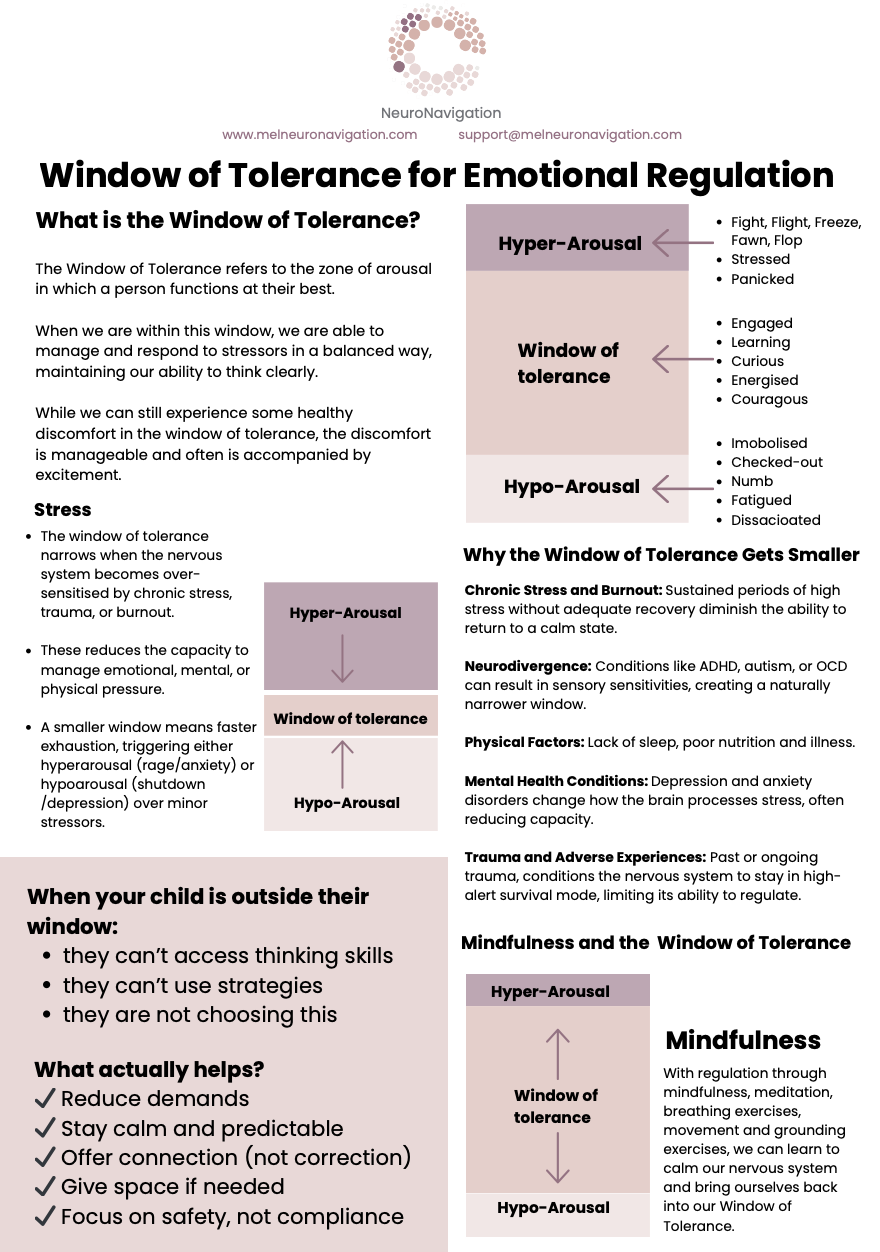
Understanding Emotional Regulation & the Nervous System.
Why do some days feel manageable, while other days even small challenges feel overwhelming?
The Window of Tolerance is a simple yet powerful way to understand how our nervous system responds to stress. When we are within our window of tolerance, we can think clearly, learn, solve problems and connect with others. When we move outside that window, our brain shifts into survival mode, making everyday tasks much more difficult.
This neurodiversity-affirming visual guide explains hyperarousal, hypoarousal and why stress, burnout, trauma, sensory differences and neurodivergence can narrow our capacity to cope. It also includes practical strategies that help support regulation and safely return to a place where learning and connection become possible.
Perfect For
✔ Parents
✔ Teachers
✔ Support Workers
✔ Therapists
✔ Neurodivergent Adults
✔ Anyone wanting to better understand emotional regulation
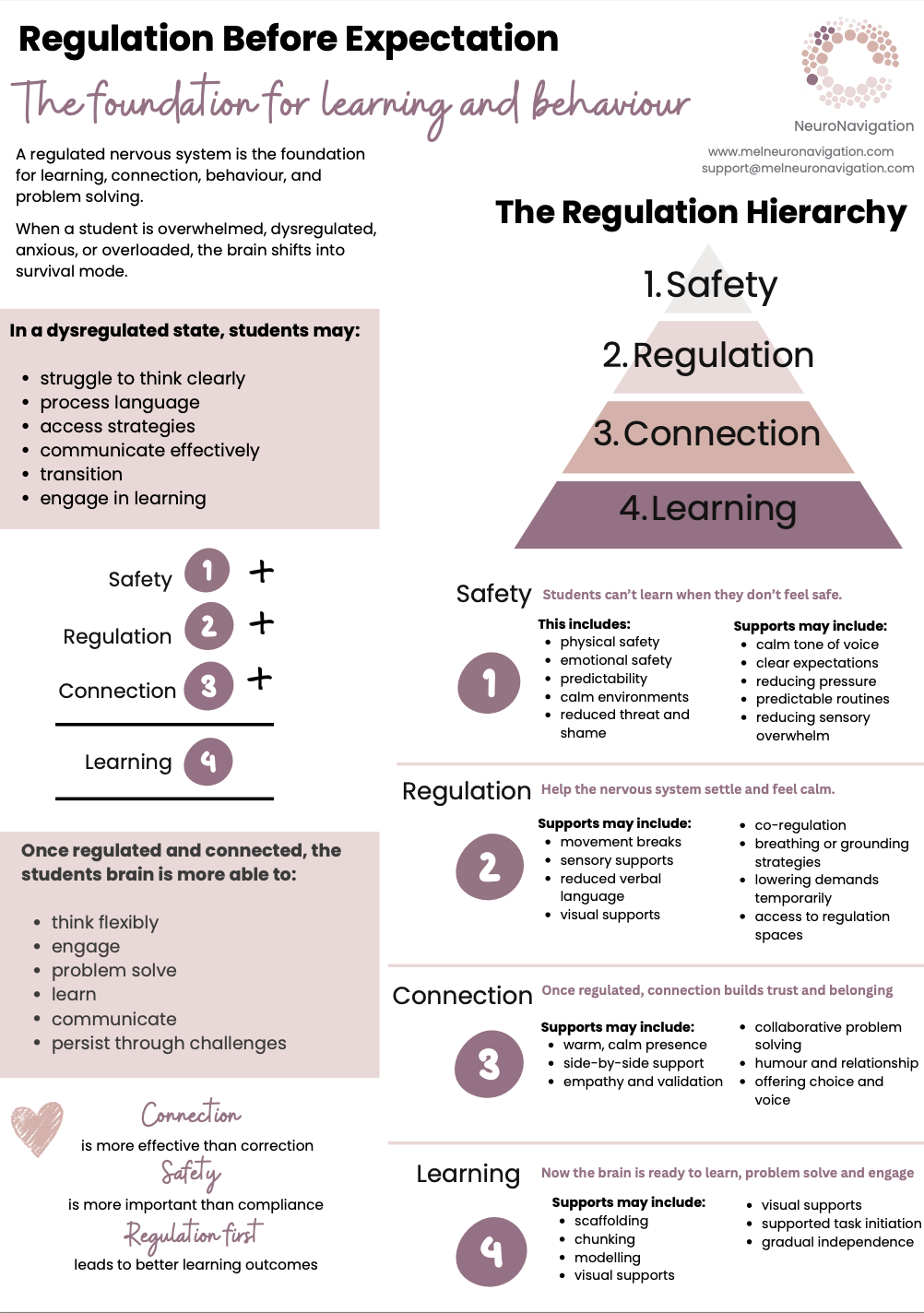
Why Safety Comes Before Learning
Learning begins with a regulated nervous system.
When children are overwhelmed, anxious or dysregulated, the thinking brain temporarily goes offline. In these moments, correction, consequences and increased expectations are often ineffective.
This visual guide introduces the Regulation Hierarchy, showing why safety, regulation and connection must come before learning. It includes practical examples of how parents, educators and support teams can reduce pressure, build trust and support meaningful engagement.
Perfect For
✔ Teachers
✔ Parents
✔ Early Childhood Educators
✔ Support Workers
✔ School Leaders
Sensory Differences
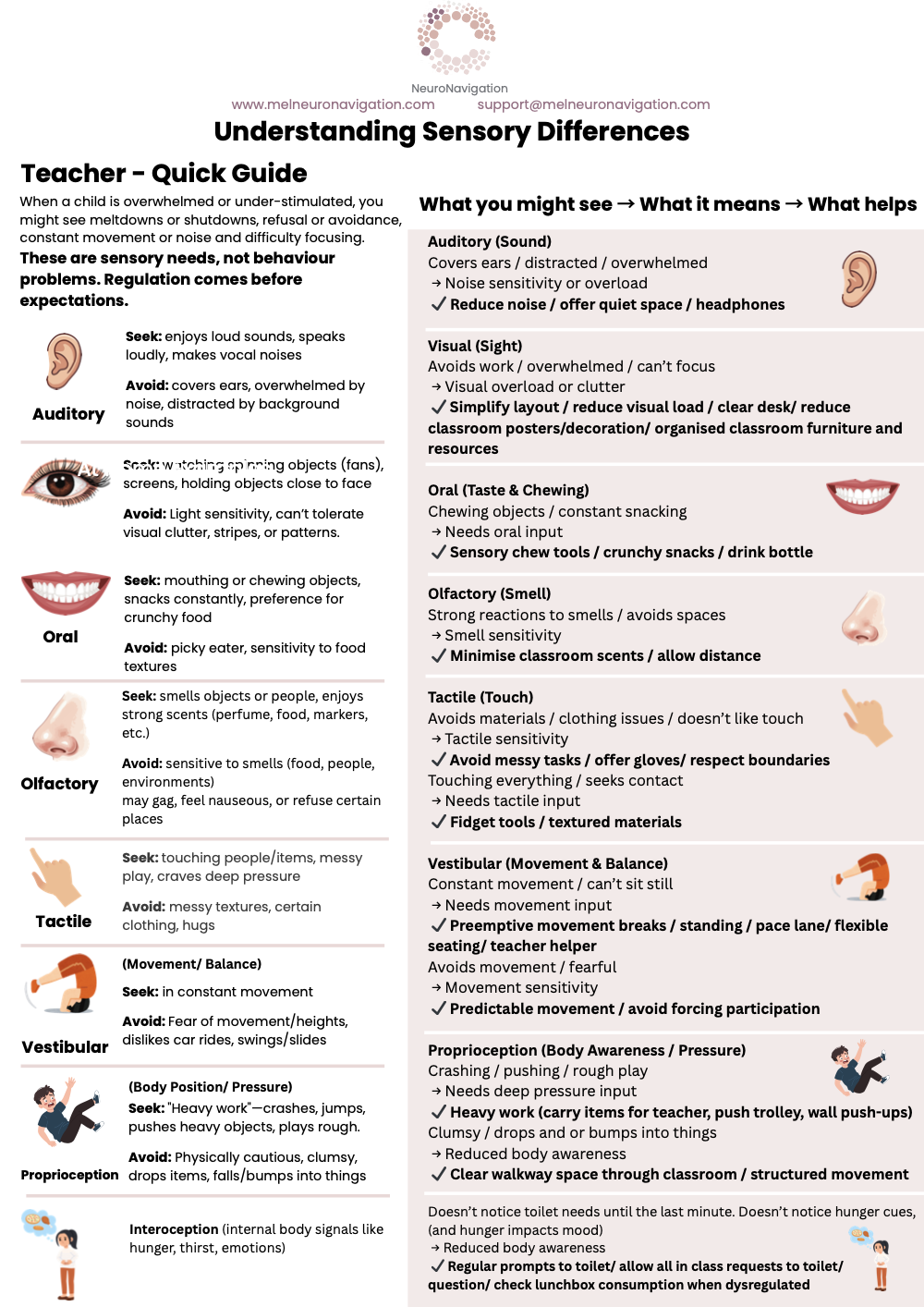
Recognise Sensory Needs & Respond with Confidence.
A practical classroom guide for understanding sensory needs.
Designed specifically for educators, this quick-reference guide helps teachers recognise what common sensory behaviours might mean and offers practical, classroom-friendly strategies that can be implemented immediately.
Instead of viewing behaviours as challenging, this guide encourages teachers to understand the underlying sensory need and respond with supportive adjustments that reduce barriers to learning and participation. It covers each sensory system, common classroom presentations and practical strategies to support regulation throughout the school day.
Perfect For
✔ Classroom Teachers
✔ Learning Support Teachers
✔ SLSOs / Teacher Aides
✔ School Leaders
✔ Relief Teachers
✔ University Education Students
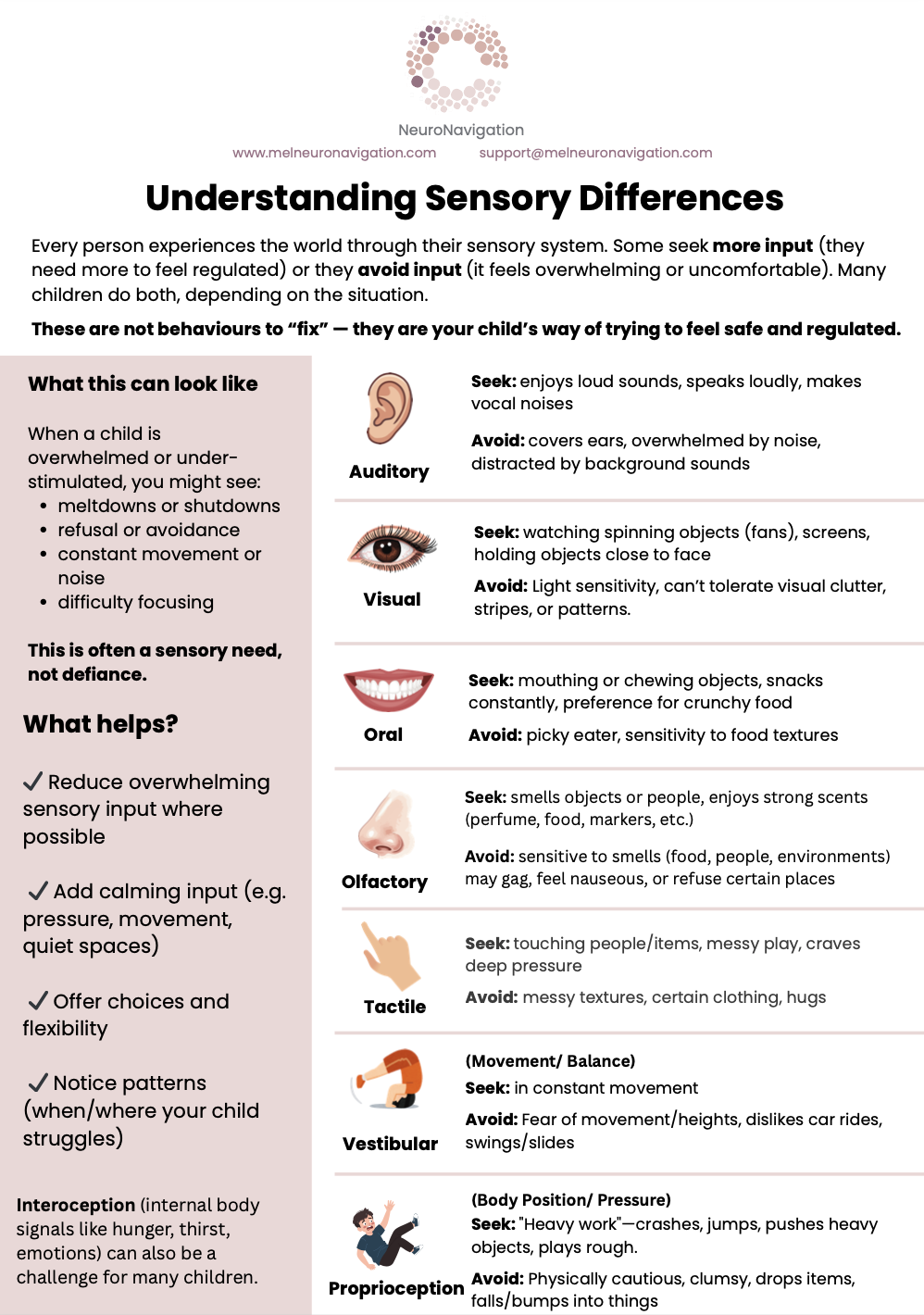
A Practical Guide for Parents & Educators.
Sensory differences are not behaviours to fix—they are the nervous system communicating what it needs.
Every neurodivergent person experiences the world differently. Some seek sensory input to feel regulated, while others avoid certain sensations because they are overwhelming or uncomfortable.
This comprehensive visual guide explores the major sensory systems, explains common sensory seeking and sensory avoiding behaviours, and provides practical strategies that support regulation at home, school and in everyday life.
Perfect For
✔ Parents
✔ Teachers
✔ Early Childhood Educators
✔ Support Workers
✔ Therapists
✔ Homeschooling Families