
 Image 1 of 1
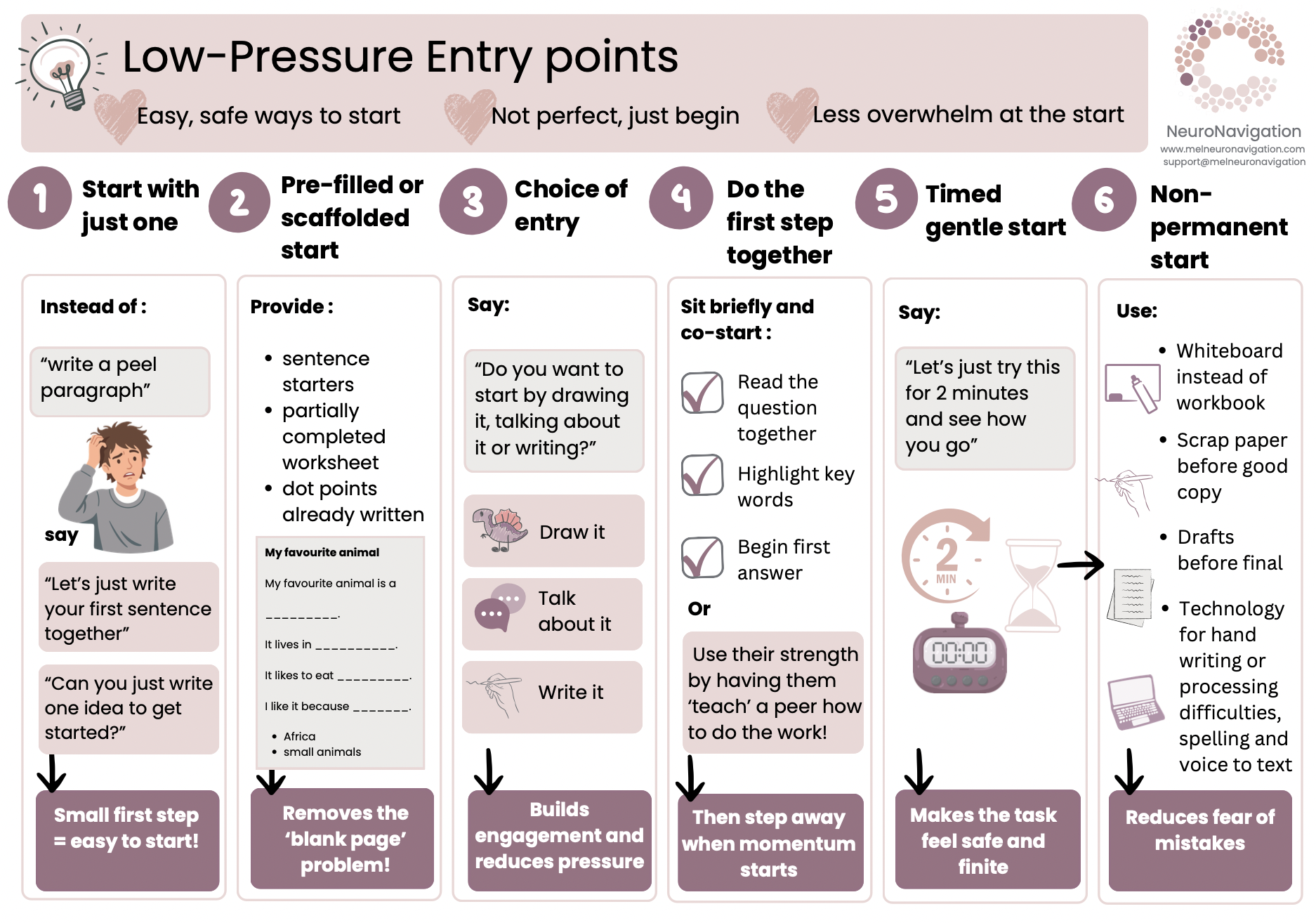
6 Practical Strategies to Help Neurodivergent Learners Start Tasks with Confidence.
Sometimes the hardest part isn't doing the work—it's getting started.
For many neurodivergent children, teenagers and adults, task initiation can feel overwhelming. Difficulties with executive functioning, anxiety, perfectionism or feeling unsure where to begin can cause even simple tasks to feel impossible.
This printable guide shares six practical, neurodiversity-affirming strategies that reduce pressure, lower overwhelm and make starting feel safer and more achievable. Designed for use at home, in classrooms or during therapy sessions, these strategies help build confidence without relying on pressure, rewards or repeated prompting.
Perfect For
Parents and caregivers
Teachers
Learning Support Teachers
SLSOs / Teacher Aides
Support Workers
Occupational Therapists
Speech Pathologists
Educational Consultants
Homeschooling families
Neurodivergent teens and adults
6 Practical Strategies to Help Neurodivergent Learners Start Tasks with Confidence.
Sometimes the hardest part isn't doing the work—it's getting started.
For many neurodivergent children, teenagers and adults, task initiation can feel overwhelming. Difficulties with executive functioning, anxiety, perfectionism or feeling unsure where to begin can cause even simple tasks to feel impossible.
This printable guide shares six practical, neurodiversity-affirming strategies that reduce pressure, lower overwhelm and make starting feel safer and more achievable. Designed for use at home, in classrooms or during therapy sessions, these strategies help build confidence without relying on pressure, rewards or repeated prompting.
Perfect For
Parents and caregivers
Teachers
Learning Support Teachers
SLSOs / Teacher Aides
Support Workers
Occupational Therapists
Speech Pathologists
Educational Consultants
Homeschooling families
Neurodivergent teens and adults